Alpacas for your lifestyle (block)
Adorable, docile and soft, alpacas are prized as pets and farmstock around the world. There are no wild alpacas. Alpacas are domesticated versions of vicuñas, South American ruminants that live high in the Andes. Alpacas are related to llamas, which are domesticated versions of another wild Andean ruminant, the guanaco. While llamas are used as pack animals, alpacas are raised mainly for their soft fibre.
Guanacos and vicuñas are found throughout the Andes Mountains. They are descended from camelids that developed in North America and migrated to South America 3 million years ago. These animals evolved into guanacos and vicuñas, and about 6,000 years ago, people in the Andes began to domesticate them. There are two breeds of alpaca, the Huacaya and the Suri. Huacaya alpacas are more common.
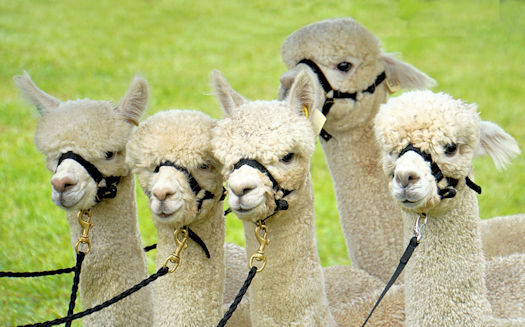
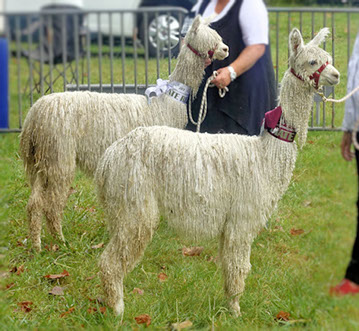
The main difference between the breeds is the length and fineness of the wool-like fibre, according to the Food and Agriculture Organization of the United Nations (FAO). The Suri have very long fibres ("silky dreadlocks," ), while the Huacaya have a more compact "crimpy" fleece, with shorter fibres.
Size
Guanacos are slightly larger than alpacas and much larger than vicuñas, but they are smaller and less heavily built than llamas. Alpacas are the smallest members of the camel family. The average height at the shoulder is 0.9 metres. They are 1.2 to 2.2 metres long and weigh 55 to 65 kilograms.
By comparison, the llama stands almost 1.2m at the shoulder and weighs from 130 to 155 kg. Camels grow to 2 metres and weigh from 400 to 600 kg.
Habitat
Wild guanacos and vicuñas live in a wide range of habitats, from the high and dry Atacama Desert in northern Chile to the wet and stormy Tierra del Fuego at the southern tip of the continent. Alpacas are also native to the Andes, at elevations of up to 4,800 metres.
Alpacas, however, are very adaptable and have been exported all over the world, including the United States, New Zealand, Australia and the Netherlands, so their "habitat" is often farmland. Still, 99 percent of the world population of alpacas is found in South America.
Habits
Alpacas are very social creatures. They are gentle and curious and with training can become great pets. Herds often include animals of different species or taxonomic families, such as llamas, goats and sheep, according to the FAO.
Alpacas spit when they are distressed or feel threatened. They will sometimes spit at each other when they are competing for food or trying to establish dominance. They won't spit at people or bite unless they have been abused.
Alpacas hum; they make a sound like "mmm," . However, they also shriek when danger is present, and make a sound similar to a "wark" noise when excited. Fighting males scream, making a warbling bird-like cry.
Alpacas in a herd all use the same area as a bathroom instead of defecating in random areas like many animals do. This behavior helps control parasites, according to the FAO. Males often have cleaner dung piles than females, according to Alpaca Ventures. Females tend to stand in a line and all go at once.
Diet
As herbivores, alpacas only eat vegetation. They eat mostly grass, but their diets can also include leaves wood, bark or stems. Like other ruminants, alpacas have a three-chambered stomach that digests the roughage efficiently.
Unlike other grazers, alpacas don't eat much. An animal only eats around 1kg per day. In general, alpacas eat 1.5 percent of their body weight each day.
Offspring
Alpacas breed once a year, and as livestock they are often induced to breed at any time. The female alpaca has a gestation period of 242 to 345 days and gives birth to just one offspring. The birthing process can take up to seven hours, according to National Geographic.
The baby alpaca, called a cria, weighs 8 to 9 kg when it is born. The cria is weaned at 6 to 8 months, and females are ready to reproduce at 12 to 15 months. Males take a bit longer to mature and are ready to mate at 30 to 36 months. Alpacas live up to 20 years.
Alpaca fur is a very prized fiber for artisans and crafters. Alpaca fur is very soft and does not retain water. It is also very durable. According to National Geographic, alpaca fur is the second strongest animal fiber, after mohair.
Alpacas come in 22 colors, from a true, blue-black through browns and tans to white.
Alpaca.net.nz 2019